
Shantou Toy Manufacturer Canton Fair Lead Generation Case Study
WQGEO CASE 007
A Canton Fair Lead Generation Project Combining GEO and Email Outreach
WQGEO coordinated GEO, the English website and four rounds of email outreach for an anonymous Shantou toy manufacturer before, during and after the 139th Canton Fair.
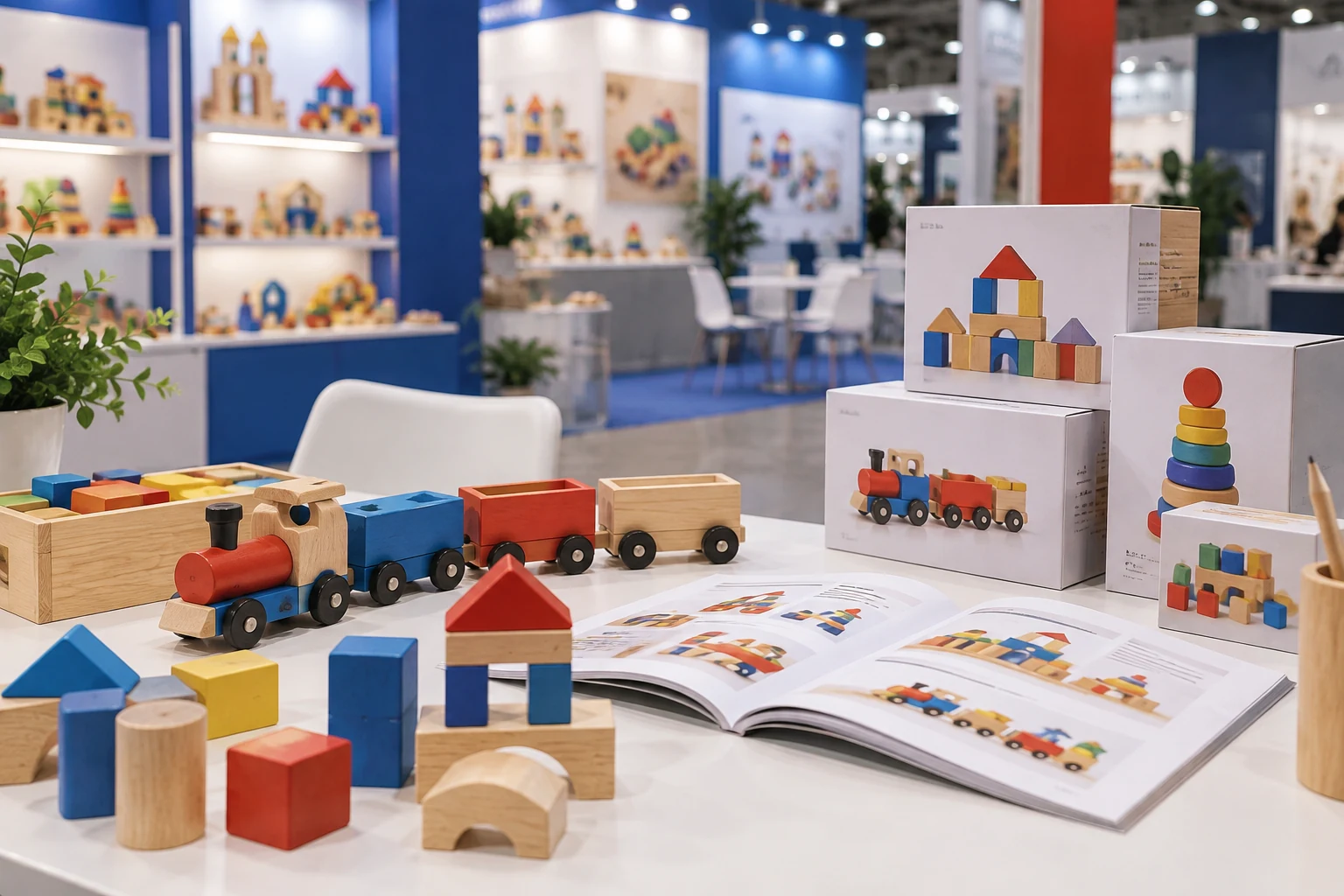
A Shantou toy manufacturer serving European, North American and Southeast Asian markets worked with WQGEO on supplier discovery, information verification and booth appointments before the 139th Canton Fair. The project began eight weeks before the fair and continued for 30 days afterward, connecting English website and source improvements, AI visibility monitoring, four email rounds and sales follow-up.
Project results
| Metric | 138th Canton Fair | 139th Canton Fair | Change |
|---|---|---|---|
| Companies with appointments that actually visited | 8 | 31 | +287.5% |
| Qualified company leads at the booth | 82 | 186 | +126.8% |
| Valid reply rate within 7 days | 10.0% | 18.6% | +8.6 percentage points |
| Paid sample orders within 30 days | 9 | 14 | +55.6% |
The toy exhibition in Phase 3 of the 139th Canton Fair ran from May 1 to May 5, 2026. The project compared performance with the 138th Canton Fair and used seven-day and 30-day observation windows for post-fair replies and orders.
Manufacturing capability existed, but buyers could not easily understand it
The company focuses on the development, manufacturing and export of OEM/ODM toys. Its main product groups are light-up and glow toys, educational construction and science toys, and outdoor parent-child toys. At the start of the project, factory information, product materials, customization capabilities and fair details were scattered across different sources. Buyers who received an email still had to ask repeatedly about minimum order quantities, sampling, suitable uses and factory capabilities.
The project therefore had three goals: make the company easier to discover, make its facts easier to verify after initial contact, and maintain a continuous record from pre-fair appointment through post-fair follow-up.
Company facts and the English website
A governed company fact record
WQGEO worked with the company owner and sales team to review the approved English company name, address, manufacturing processes, product scope, OEM/ODM services, delivery terms and contact details. The team consolidated these facts into one record. Product information was reorganized around procurement decisions: intended use, materials, dimensions and age guidance first, followed by customization scope, minimum order conditions, packaging, sampling steps and delivery arrangements.
English content for three priority product groups
Pages for light-up and glow toys added lighting methods, materials, use scenarios and packaging customization. Educational construction toy pages clarified components, assembly methods, age guidance and customization options. Outdoor parent-child toy pages explained use scenarios, structural features, packaging and shipping considerations. The factory profile, OEM/ODM process, procurement questions and quality-document guidance were improved at the same time.
Fair information became an appointment entry point
The fair page brought together the approved English company name, fair dates and booth details, new product series, available cooperation topics and appointment options. Buyers could submit their company, contact, products of interest and intended visit time. Product links and appointment links in the email rounds led to the relevant pages.
Crawl access and information structure
The project checked access to priority pages, readable body content, titles, internal links, sitemaps and robots settings. Important procurement facts were not left only in images or downloadable files. Structured fields were based on visible page content, with consistent company, product and contact details.
External sources and AI visibility
WQGEO reviewed existing exhibitor profiles, industry directories and public channels. English names, product categories, addresses and contact details were corrected where needed, and product capabilities and fair information were linked to the corresponding website pages. External materials followed the same approved facts as the website so buyers could cross-check company identity and product capability.
The project used 20 English questions that did not contain the company name or domain. Each question was tested in ChatGPT, Gemini and Perplexity, producing 60 answers in each measurement round. The same questions were used before and after implementation in new sessions, with language, region, browsing status and visible model version recorded.
| Platform | Answers per phase | Mentions before | Mentions after | Website citations after |
|---|---|---|---|---|
| ChatGPT | 20 | 1 | 5 | 3 |
| Gemini | 20 | 0 | 4 | 2 |
| Perplexity | 20 | 1 | 6 | 4 |
| Total | 60 | 2 | 15 | 9 |
Unaided brand mention rate in the fixed question set rose from 3.3% (2/60) to 25.0% (15/60), an increase of 21.7 percentage points. After implementation, 9 of 60 answers cited the company website, equal to 15.0% of all answers.
A separate set of 10 brand-named fact-checking questions was tested once on each of the three platforms, producing 30 answers per phase. Answers that contained the main facts without a material error rose from 12 to 26. Brand fact accuracy therefore increased from 40.0% to 86.7%. These figures describe the fixed sample at the recorded test times; they do not represent every buyer's search experience.
Four email rounds moved contact toward booth appointments
WQGEO helped organize an initial pool of 986 overseas toy buyers, retaining one primary contact per company and grouping them by market, product interest and communication status. Eight weeks before the fair, the first round introduced the three product groups and the exhibition plan. Six weeks before, the second added factory capability, quality materials and the OEM/ODM process. Four weeks before, the third sent booth details, priority products and the appointment entry point. One week before, the fourth confirmed visit times with responding buyers and provided venue directions.
| Round | Emails sent | Delivered | Delivery rate | Opens | Open rate |
|---|---|---|---|---|---|
| Round 1 | 986 | 926 | 93.9% | 231 | 24.9% |
| Round 2 | 972 | 923 | 95.0% | 249 | 27.0% |
| Round 3 | 959 | 911 | 95.0% | 273 | 30.0% |
| Round 4 | 948 | 902 | 95.1% | 289 | 32.0% |
| Total | 3,865 | 3,662 | 94.7% | 1,042 open events | 28.5% |
The four rounds sent 3,865 emails, of which 3,662 were successfully delivered. Opens totaled 1,042 across rounds and represented 398 unique people after deduplication. The overall open rate was calculated as 1,042 / 3,662, or 28.5%. Email contact data was used to evaluate outreach and was not treated as an independent GEO outcome.
Before the fair, 45 companies reached high-intent inquiry status. Of these, 36 confirmed appointments and 31 actually visited the booth, an appointment attendance rate of 86.1%. Appointment records covered product interest, visit time, communication status and reception arrangements.
Booth reception and post-fair follow-up
The team recorded 214 booth receptions during the fair, representing 198 unique companies after deduplication, including the 31 appointment visitors. Based on procurement need and contact completeness, 186 companies were classified as qualified leads.
| Discovery or verification path | Companies | Interpretation |
|---|---|---|
| First discovered the company through AI | 9 | AI participated in initial discovery |
| Used AI to verify the company after email or another contact | 7 | AI participated in later verification |
| Booked through email and did not report AI use | 10 | The recorded path was email outreach |
| Source record incomplete | 5 | Retained as an unknown source |
Sixteen companies reported using AI during discovery or verification. This does not mean that GEO independently generated all 16 visits. Initial-contact channels, verification channels and the final appointment action overlapped.
Of the 186 qualified leads, the first follow-up email was successfully delivered to 183 companies. Within seven days, 34 companies sent a valid reply, a reply rate of 18.6%. Within 30 days, 58 companies made a clear inquiry, 23 requested samples and 14 completed a paid sample order. Each company was counted once, for 14 orders in total. Paid sample orders are not bulk purchase orders.
Key operational metrics
| Metric | Result |
|---|---|
| High-intent inquiries before the fair | 45 |
| Confirmed appointments | 36 |
| Actual booth visits | 31 |
| Appointment attendance rate | 86.1% |
| Total booth receptions | 214 |
| Unique companies received | 198 |
| Qualified company leads | 186 |
| Successfully delivered first-round follow-up emails | 183 |
| Valid replies within 7 days | 34 |
| Seven-day reply rate | 18.6% |
| Clear inquiries within 30 days | 58 |
| Sample requests | 23 |
| Paid sample orders | 14 |
WQGEO work and deliverables
| Workstream | Deliverable | Purpose |
|---|---|---|
| Company and product information | Company fact record, product information and procurement Q&A | Keep public facts consistent |
| English website content and structure | Factory, product, cooperation-process and exhibition pages | Support discovery, verification and inquiry |
| External source maintenance | Channel corrections, content materials and link records | Support cross-checking |
| AI visibility monitoring | Fixed question set, answer records and before-and-after statistics | Observe mentions, citations and accuracy |
| Pre-fair email and appointment support | Four email rounds, segmentation rules and appointment summary | Advance communication and visits |
| Lead and follow-up coordination | Record fields, intent rules and follow-up content | Connect pre-fair, on-site and post-fair work |
| Project review | Business metric table and channel-source analysis | Identify changes and next improvements |
How to interpret the growth
Appointment-based booth visits increased by 23 companies, qualified leads increased by 104 companies, the valid seven-day email reply rate increased by 8.6 percentage points, and paid sample orders within 30 days increased by 5. At the same time, unaided brand mentions and brand fact accuracy improved in the fixed question sets, and some booth visitors reported using AI to discover or verify the company.
The results reflect the combined effect of organized website information, English content, external sources, AI visibility, email outreach, booth reception and post-fair follow-up. The project did not include a control group capable of isolating a single factor, and the two fairs took place in different spring and autumn seasons. New products, booth conditions, buyer mix and sales execution may also have affected the outcome. We therefore cannot attribute all growth to GEO.
Statistical notes and scope
At the 138th Canton Fair, 82 companies were classified as qualified leads, the first follow-up was successfully delivered to 80, and 8 sent a valid reply within seven days, producing a 10.0% reply rate. At the 139th fair, the corresponding figures were 186, 183 and 34, producing an 18.6% reply rate. Both fairs deduplicated records by company and used successfully delivered company emails as the denominator.
The seven-day window after the 139th fair was May 6-12, 2026, and its 30-day window was May 6-June 4. The corresponding windows for the 138th fair were November 5-11 and November 5-December 4, 2025. Inquiries and orders used the 30-day window.
This case is applicable to an export manufacturer with verifiable company and product facts, an English website that can be improved, an identifiable buyer pool, a defined exhibition or campaign, and sales capacity for consistent reception and follow-up. Measurement remains specific to the recorded questions, platforms, dates, markets and operational conditions.